


Rules and Registration
GENERAL INFORMATION
October 24 and 25, 2026
AWARDS:
First, second, and third place in each category will receive a medal and diploma.
-
SCORES will be sent to the RA´ ATIRAS of each group via email, and independent dancers will receive them the same way. Therefore, it is very important to ensure that your email address is written correctly and has enough space at the time of registration.
-
Justifications apply only to group categories and will not be requested in printed form during the competition.
-
Subsequent payments after your initial deposit must be sent to the official email iaoratahiticompetition@gmail.com or to the official WhatsApp number +689 87 38 39 05, which only receives messages during business hours from 9:00 a.m. to 8:00 p.m.
-
The winner of the Senior Division Solist ‘Ote’a category with the highest score will earn a direct pass to participate in the ‘ORI TAHITI WORLD CHAMPIONSHIP 2027, held annually on the island of Tahiti in French Polynesia, and will also receive a round-trip flight from LAX to Papeete, Tahiti, provided by Air Tahiti Nui.
-
The first-place winner of the Heiva category will receive a trophy, diploma, and a round-trip flight ticket from LAX to Papeete, Tahiti, provided by the airline.
-
The first-place winner of the Mehura category will receive a trophy, diploma, and a round-trip ticket from LAX to Papeete, Tahiti, provided by the airline.
-
The judges’ decision is final. Any inappropriate behavior by members of participating groups that shows disrespect or goes against the competitive spirit will result in disqualification from the competition.
NOTE: STRICTLY PROHIBITED
It is strictly prohibited to bring private public security groups into the venue before, during, or after the competition.
STEPS TO FOLLOW
-
Review the official guidelines carefully.
-
Complete your payment (deposit or full payment).
-
Fill out the registration form for the category you will compete in.
-
Submit any remaining payments to the official email: iaoratahiticompetition@gmail.com. All fees must be fully paid by September 15th.
GROUPS
Get your team ready to shine together!
Upload your music in MP3 format if you will be using recorded music, along with your justifications in the “Justifications and More” section.
-
Upload an editable version of your group logo during registration.
-
All justifications must be submitted by September 30th. These must include a minimum of four letter-sized pages describing the Tumu Parau of your performance according to your category. A printed booklet must also be presented for each judge at registration, in Reo Ma’ohi, English, and French.
BANK DETAILS
TRANSFER OR DEPOSIT
Laura Cecilia Vidriales Arcos
BANCOMER
4152 3145 9697 2821
012028015961993389
#1596199338
BANORTE
4189 1432 9512 4757
072028011943157611
#1194315761
Paypal account:
IMPORTANTE: Una vez realizado el pago, ya sea parcial o completo, no hay reembolso. Los pagos no son transferibles.

´ORI TAHITO SOLOIST
COST:
$75 US DLLS
RESERVATION DEPOSIT TO SECURE YOUR SPOT
$30 US DLLS
SENIOR DIVISION
-
18 – 22 years old
-
23 – 25 years old
-
26 – 30 years old
-
31 – 35 years old
-
36-40 years old
-
41+ years old
JUDGING CRITERIA
Participants will be evaluated based on:
-
Technique (basic steps such as Tahiri Tamau, Afata, Varu, Nu’u Tifene, Tumami, Fa’arapu Paoti), movement quality, and body expression
-
Stage presence
-
Connection with the audience
-
Artistic originality
MUSIC
‘Ōte’a may be performed with live or recorded music. Participants must include a Pata’u tau, which must be justified and submitted to the organization.
Duration: 2:30 minutes
AWARDS
First, second, and third place will receive a medal and diploma.
COSTUME REQUIREMENTS
Natural hair is mandatory for all dancers.
Headpieces no more of 20 cm and neck adornments may be made from natural materials such as flowers and vegetation.
Tape’a titi (bra/top) must be made from natural materials such as cotton, coconut fiber, palm, or other vegetal elements. It may also be decorated with fresh vegetation over the base material.
Ornaments for ankles, wrists, arms, and neck are allowed, as long as neck accessories do not exceed the height of the navel line. All elements must coordinate with the headpiece.
Any loss of a costume element during performance will result in penalties.
Belts and hip ornaments are strictly prohibited.
WINNER BENEFITS
The winner of the Solo ‘Ori Tahiti category will receive a scholarship for the IA ORA TAHITI Certification 2027, as well as free registration to the Ia Ora Tahiti Competition Anaheim 2027.

COST:
$ 65 US DLLS
RESERVATION DEPOSIT TO SECURE YOUR SPOT
$30 US DLLS
CATEGORIES
Each category will be divided into two levels:
-
Beginner – Intermediate
-
Advanced
JUNIOR DIVISION
-
Hine Tamahou: 6 – 8 years old
-
Tamahine: 9 – 11 years old
-
Hine Taure’a: 12 – 14 years old
-
Hine Taure’a: 15 – 17 years old
SENIOR DIVISION
-
Poe: 18 – 21 years old
-
Mata’i: 22 – 25 years old
-
Ario’i: 26 – 29 years old
-
Fetia: 30 – 35 years old
-
Vaima: 36 – 40 years old
-
Ari’i: 41+ years old
JUDGING CRITERIA
-
Technique
-
Stage presence
-
Musicality and rhythm
-
Fa’arapu
-
MUSIC
-
‘Ōte’a with music created by Mevina Liufau, which will be provided along with the translation of its Pata’u tau
Duration: 1:20 min (all levels) -
‘Ōte’a with live music
Duration: 1:35 min (all levels) -
AWARDS
First, second, and third place will receive a medal and diploma.
COSTUME REQUIREMENTS
Costumes may be made from natural materials (flowers and vegetation) or artificial materials (shells, tapa, rooster feathers, palm, coconut fiber, etc.).
Each costume must include a pareu and a tape’a titi (bra/top) made of cotton, coconut fiber, palm, or other vegetal materials.
The pareu must be made of cotton, with a length up to knee level, and must not be tied with a knot at the waist.
The tape’a titi (bra/top) may be decorated over its base material with fresh vegetation and/or artificial elements, and may be coordinated with head and neck ornaments.
Ornaments for ankles, wrists, arms, and neck are allowed, as long as neck accessories do not exceed the height of the navel line. All elements must match the headpiece.
Any loss of a costume element during performance will result in penalties.
Belts and hip ornaments are strictly prohibited.
COMPETITION ROUNDS
ELIMINATION ROUND
All registered competitors in Beginner–Intermediate and Advanced levels will participate.
FINAL ROUND
A second performance for selected competitors, from which the top 3 places in each category will be determined.
Selected participants will be announced during the competition. In case of a tie, a “dance off” will be held to determine final placement.
OVERALL ROUND
First-place winners from the Advanced categories will advance to the “OVERALL” round.
FINAL ROUND (SPECIAL SOLO CATEGORIES)
Winners of the Solo ‘Ōte’a categories in both Junior and Senior divisions will participate in a final round under the following criteria:
Judging Criteria
-
Stage presence
-
Musicality and rhythm
-
Fa’arapu
-
COSTUME (FINAL ROUND EVALUATION)
Costume will be judged independently from performance and the best costume will be awarded at the judges’ discretion. The winner will receive a costume made with natural more imported from Tahiti.
Women’s costumes must include a printed cotton pareu with a knee-length cut, not tied at the waist.
The tape’a titi (bra/top) may be decorated with fresh vegetation over its base material.
Any loss of a costume element will result in penalties.
Only headpieces made of fresh vegetation are allowed, with a maximum height of 15 cm.
WINNERS
The winner of the Senior Solo ‘Ōte’a Division with the highest score will earn a direct pass to participate in the Ori Tahiti World Championship 2027, held annually in Tahiti, French Polynesia, and will receive a round-trip flight LAX–Papeete Tahiti provided by Air Tahiti Nui.
To claim the prize, the winner must have:
-
A valid U.S. visa
-
A valid passport of their nationality
If the winner does not meet these requirements, the prize will be transferred to the next highest scoring participant. The alternate winner must present valid documentation within 3 months of being named, including:
-
A passport valid for at least 6 months at the time of travel
-
A U.S. visa valid for at least 1 year
Flight availability is subject to airline schedules. The winner must cover applicable taxes associated with the round-trip flight. The awarded flight may only be used to participate in the following year’s Ori Tahiti World Championship.

COST
$65 US DLLS
DEPOSIT TO RESERVE YOUR SPOT
$30 US DLLS
CATEGORIES
Each category will have two levels:
Beginner – Intermediate
Advanced
JUNIOR DIVISION
-
TAMAOHU 6-8 años
-
TAMAROA 9-11 años
-
TAMA TAURE ́A 12-14 años
-
TAMA TAURE ́A 15-17 años
SENIOR DIVISION
-
POE 18 - 21 años
-
MATA ́I 22 - 25 años
-
ARIO ́I 26 - 29 años
-
FETI ́A 30 - 35 años
-
VAIMA 36 - 40 años
-
ARI’I 41 +
WINNERS
The winner of the Senior Division Solist ‘Ote’a category with the highest score will earn a direct pass to participate in the ‘ORI TAHITI WORLD CHAMPIONSHIP 2026, held annually on the island of Tahiti in French Polynesia, and will also receive a round-trip flight from LAX to Papeete, Tahiti, provided by Air Tahiti Nui.
To claim the prize, the winner must have:
-
A valid United States visa (for ppl outside of USA)
-
A valid passport from their country of nationality
If the winner does not have the required documents mentioned above, the participant with the next highest score will be awarded the prize. The deadline to present the required documentation will be 3 months after the date on which they are घोषित the winner, as well as having a Mexican passport valid for at least 6 months at the time of travel to Tahiti, and a U.S. visa valid for at least 1 year.
The prize is subject to flight availability. The winner must cover any applicable taxes associated with the round-trip flight. The awarded flight may only be used to compete again in the ‘Ori Tahiti Nui World Championship the following year.

COST
$65 US DLLS
DEPOSIT TO RESERVE YOUR SPOT
$30 US DLLS
CATEGORIES
Each category will have two levels:
Beginner – Intermediate
Advanced
The participants will perform in groups of three dancers, which will be assigned by the event organization based on the participants’ ages.
EVALUATION CRITERIA
Stage Presence
Technique
Tumu Parau
MUSIC
Musical compositions in reo mā’ohi will be provided to each participant for selection, subject to availability, with a duration of 3:00 minutes for all participants.
COSTUME
Head ornaments are mandatory and may be made from natural materials (flowers and vegetation) and/or artificial materials (shells, tapa, rooster feathers, palm, coconut fiber, etc.).
A long, one-piece dress (purotu dress, mama rū’au dress, etc.) or a tape’a titi set (brassiere/top) with a skirt for female dancers.
Costumes must be justified according to the tumu parau of the songs assigned to the participants.
Ankle, wrist, and arm ornaments are allowed, as well as neck adornments that do not extend below the navel. All must be coordinated with the head ornament.
Belts and hip adornments are strictly prohibited.
The falling of any costume element will result in a penalty.
AWARDS
First, second, and third place: Medal and diploma will be awarded.

COST:
$75 US DLLS
DEPOSIT TO RESERVE YOUR SPOT
$30 US DLLS
ELIGIBILITY
Must have won Overall as a soloist in an ‘Ori Tahiti competition during 2024 or 2025, recognized as eligible by our organization.
Age: 18 to 35 years old
Pupu Ori groups with at least 5 years of experience may select one Tāne and one Vahine to compete in the CHAMPIONS category.
Contact us if you have any questions about your eligibility.
MUSIC
Participants will perform an original Ōte'a and Aparima, created by Mevina specifically for the CHAMPIONS category. The music will be sent via email. All competitors will dance to the same track on the day of the competition.
Reciting the ‘Ōrero during the Ōte'a performance, which is integrated into the music provided, is not mandatory but will be considered in the evaluation of performance.
EVALUATION
Technical mastery, Choreography, Stage presence, Artistic expression, ‘Ōrero coherence
FINAL ROUND
-
The top three soloists from the Tāne (men) and Vahine (women) categories will compete head-to-head, dancing to live, improvised music performed by our percussionists. Duration: 2 minutes
-
Evaluation will be based on:
Technical mastery of basic movements, Stage presence, Quality and endurance of fa'arapu or pa'oti, Artistic expression through choreography and musicality.
COSTUME
VAHINE: Must be a two-piece outfit: a bra and a solid-colored cotton pāreu.
TĀNE: The use of a solid-colored tīhere is mandatory.
-
Neck adornments/hei that do not extend below the navel are allowed.
-
Wristbands, anklets, and bracelets are allowed.
-
There are no height or length restrictions for headpieces.
-
Fresh or dried natural materials may be used.
-
Hip belts and rolled pāreu are not allowed.
-
Best Costume Award (does not affect dance scoring; will be evaluated separately).
JUDGES AND EVALUATION CRITERIA
A panel of experts in ‘Ori Tahiti and Reo Tahiti, as well as members of the Ori Tahiti Nui World Championship judging panel, with Manuoche Lehartel as head judge, will select the ‘Ori Tahiti Champions 2026.
Point Deductions:
-
Points will be deducted for costume malfunctions or failure to comply with the rules.
-
Points will be deducted if undergarments are exposed.
-
Competitors must follow all rules and guidelines.
-
Each violation will result in a 10-point deduction from the final score.
AWARDS
The highest score will receive a World Pass to compete in the ‘Ori Tahiti Nui World Championship 2027, to be held on the island of Tahiti in French Polynesia.
Si quieres, puedo juntar todo en un reglamento completo listo para PDF o redes sociales con formato profesional.

COST
$85 US DLLS
DEPOSIT TO RESERVE YOUR SPOT
$30 US DLLS
CATEGORY
-
‘Ote’a
-
‘Aparima
FORMAT
-
Male and Female
-
Male and Male
-
Female and Female
EVALUATION CRITERIA
-
Technique
-
Stage Presence
-
Artistic Execution and Originality
MUSIC
May be recorded or live
-
‘Ote’a: 2:30 min. maximum
-
‘Aparima: 3:00 min. maximum, in reo mā’ohi
COSTUME
FOR ‘APARIMA
Women: A long, one-piece dress (purotu dress, mama rū’au dress, etc.) or a tape’a titi set (bra/top) with a skirt.
Men: Shirt with pants or pāreu.
Costumes must be justified according to the tumu parau of the songs assigned to the participants.
FOR ‘OTE’A
Women: Must wear a cotton pāreu and a tape’a titi (bra/top) made of cotton, coconut fiber, palm, or other plant-based materials.
The tape’a titi (bra/top) may be decorated over its base material with fresh vegetation or artificial materials and/or combined with head and neck ornaments.
The pāreu must be made of cotton and should reach knee length; it must not be rolled or tied with a knot at the hip.
Men: Must wear a cotton pāreu ta’amu tīhere. The use of a maro is prohibited.
I
N BOTH CASES
Head ornaments are mandatory and may be made from natural materials (flowers and vegetation) or artificial materials (shells, tapa, rooster feathers, palm, coconut fiber, etc.).
Ankle, wrist, and arm ornaments are allowed, as well as neck adornments that do not extend below the navel. All must be coordinated with the head ornament.
Belts and hip adornments are strictly prohibited.
The falling of any costume element will result in a penalty.
AWARDS
First, second, and third place: Trophy and diploma will be awarded.

COST
$20 US DLLS per participant in the group
DEPOSIT TO RESERVE YOUR SPOT
$30 US DLLS
DESCRIPTION
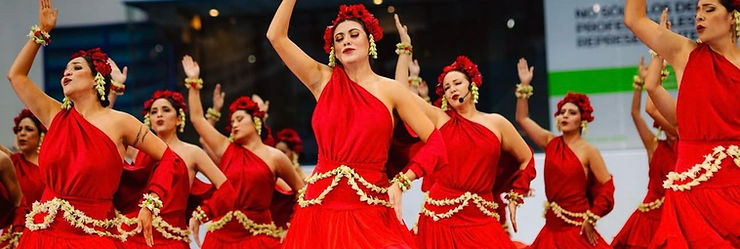
Present a performance that develops a legend of Polynesian origin, including the following elements:
-
‘Ōrero
-
‘Ote’a
-
‘Aparima
-
Arofa
These elements may be presented in any order chosen by each group, as long as they are justified within the theme.
DURATION
Maximum 15 minutes
MUSIC
Music may be recorded or live.
Covers of existing songs are allowed, provided they are performed in reo mā’ohi.
PARTICIPANTS
Minimum of 8 dancers (male and female), between 6 and 15 years old.
A ra’atira ‘ōrero must be present during the performance.
COSTUME
Must be justified according to the tumu parau.
EVALUATION CRITERIA
-
‘Ōrero
-
‘Ote’a‘
-
Aparima
-
Arofa
-
Tumu parau
-
Stage Presence
AWARDS
First, second, and third place: Trophy and diploma will be awarded.
COST
$25 US DLLS per participant in the group
DEPOSIT TO RESERVE YOUR SPOT
$30 US DLLS
DESCRIPTION
Present a completely original performance based on the style known as Mehura, including the following elements:
-
‘Ōrero
-
Mehura dance
DURATION
4 to 6 minutes maximum
CATEGORIES
-
Amateur
-
Professional
MUSIC
-
Music will be performed live, and the organization will provide the band, directed by Mevina Liufau and her musical group.
-
Groups may also bring their own musicians, who must pay an entry fee at a special rate.
-
Covers of existing songs are allowed, provided they are performed in reo mā’ohi.
-
Authorized instruments include guitar, ‘ukulele, bass, accordion, and harmonica—preferably electro-acoustic to facilitate sound capture.
-
Traditional instruments such as tari parau, pahu tūpa’i, ‘īhara, vivo, tītāpu, pū ‘ofe, hue, and pū are also allowed, as well as all sounds produced from natural Polynesian materials (mother-of-pearl, stones, seeds, etc.).
PARTICIPANTS
-
Minimum of 9 dancers and a maximum of 60 dancers.
-
A minimum of 5 musicians and a maximum of 6 musicians are allowed.
-
Up to 3 vocalists are permitted to sing the lyrics of the performance; they may not play instruments simultaneously.
-
A ra’atira ‘ōrero must introduce the group and the story of the performance.
-
The total number of participants (dancers and musicians combined) must be a minimum of 13 and a maximum of 30 people.
COSTUME
-
Female dancers: A long, one-piece dress (purotu dress, mama rū’au dress, etc.).
-
Male dancers: Shirt with pants or pāreu.
-
Costumes must be justified according to the tumu parau.
AWARDS
First, second, and third place will be awarded.
The judges’ decision is final. Any inappropriate behavior by members of participating groups that shows disrespect or goes against the competitive spirit will result in disqualification.
The winning group will receive a round-trip ticket from LAX to Papeete (PPT). Winners must have a valid U.S. visa at the time the prize is awarded or present the required documentation within 3 months after the awards ceremony.
EVALUATION CRITERIA
-
‘Ōrero
-
Tumu Parau (Theme Development)
-
Choreography (Execution of steps, rhythm, synchronization, posture, and expression)
-
Stage Presence (Presentation, emotional connection, communication of the theme)
-
Staging (Opening, use of space, and finale)

COST
$25 US DLLS per participant in the group
DEPOSIT TO RESERVE YOUR SPOT
$30 US DLLS
DESCRIPTION
Present a performance that develops a Polynesian legend, including the following elements:
-
‘Ōrero
-
‘Ote’a
-
‘Aparima
-
Arofa
DURATION
6 to 8 minutes maximum
CATEGORIES
-
Live
-
Recorded music
MUSIC
Music may be live or recorded.
Covers of existing songs are allowed, provided they are performed in reo mā’ohi.
Authorized instruments include guitar, ‘ukulele, bass, accordion, and harmonica—preferably electro-acoustic to facilitate sound capture.
Traditional instruments such as tari parau, pahu tūpa’i, ‘īhara, vivo, tītāpu, pū ‘ofe, hue, and pū are also allowed, as well as all sounds produced from materials of the Polynesian natural environment (mother-of-pearl, stones, seeds, etc.).
PARTICIPANTS
Minimum of 9 dancers and a maximum of 80 dancers.
COSTUME
Must be justified according to the tumu parau.
AWARDS
First, second, and third place will be awarded.
EVALUATION CRITERIA
-
‘Ōrero
-
‘Ote’a
-
‘Aparima
-
Arofa
-
Tumu Parau (theme transmission: music, costume, etc.)
-
Choreography (relevance of steps, posture and movement, gestures, precision, rhythmic accuracy, synchronization, technique)
-
Stage presence (staging, emotional connection, communication)
-
Set design (opening, closing, use and construction of space)

COST
$25 US DLLS per participant in the group
DEPOSIT TO RESERVE YOUR SPOT
$50 US DLLS
DESCRIPTION
Present a performance that develops a Polynesian legend, including the following elements:
-
‘Ōrero in reo mā’ohi
-
‘Ote’a (Amui, Vahine, Tāne if the group includes them)
-
‘Aparima (Amui, Vahine, Tāne if the group includes them)
-
Paoa
-
Hivinau
-
Arofa
-
Interpretation of the Tumu Parau
-
Justification of the Tumu Parau
-
Costume
CATEGORIES
-
Hura Ava Tau (Amateur)
-
Hura Tau (Professional)
DURATION
-
HURA AVA TAU (AMATEUR): 20 to 25 minutes maximum
-
HURA TAU (PROFESSIONAL): 28 to 35 minutes maximum
MUSIC
Music may be live or recorded.
Covers of existing songs are allowed, provided they are performed in reo mā’ohi.
Authorized instruments include guitar, ‘ukulele, bass, accordion, and harmonica—preferably electro-acoustic to facilitate sound capture.
Traditional instruments such as tari parau, pahu tūpa’i, ‘īhara, vivo, tītāpu, pū ‘ofe, hue, and pū are also allowed, as well as all sounds produced from elements of the Polynesian natural environment (mother-of-pearl, stones, seeds, etc.).
PARTICIPANTS
Only all-female groups (Vahine) may participate.
A ra’atira ‘ōrero must be present to introduce the group and the story of the performance.
-
HURA AVA TAU (AMATEUR): minimum 8 dancers and maximum 20 dancers.
-
HURA TAU (PROFESSIONAL): minimum 20 dancers and maximum 80 dancers.
COSTUME
Must be justified according to the tumu parau.
HURA TAU (PROFESSIONAL): A Grand Costume must be worn during the final ‘Ote’a.
AWARDS
First, second, and third place will be awarded.
The winning group will receive a round-trip ticket from LAX to Papeete (PPT). Winners must have a valid U.S. visa at the time the prize is awarded or submit their documentation within 3 months after the awards ceremony.
EVALUATION CRITERIA
-
Entrance
-
Costume
-
‘Ōrero in reo mā’ohi
-
‘Ote’a (Amui, Vahine, Tāne if the group includes them)
-
‘Aparima (Amui, Vahine, Tāne if the group includes them)
-
Paoa
-
Hivinau
-
Arofa
-
Tumu Parau (theme transmission: music, costume, etc.)
-
Choreography (relevance of steps, posture and movement, gestures, precision, rhythmic accuracy, synchronization, technique)
-
Stage presence (staging, emotional connection, communication)
-
Set design (opening, closing, use and construction of space)

COST
$25 US DLLS per person (group member)
DEPOSIT TO RESERVE YOUR SPOT
$25 US DLLS
DESCRIPTION
Directed to all participants of the Tavake Rereata 2024 Workshop Tour and Hiti Hura 2025, where each venue’s tumu parau must be developed.
-
‘Orero
-
‘Ote’a
-
‘Aparima
DURATION
4 to 8 minutes maximum
MUSIC
Music may be recorded or live.
MEMBERS
Minimum 5 dancers and maximum 25
COSTUME
Must be justified according to the tumu parau.
PRIZES
First, second, and third place will be awarded.
The winning group will receive a round-trip ticket from LAX to Tokyo, so they must have a valid U.S. visa at the time the prize is awarded or submit documentation within 3 months after the award.
JUDGING CRITERIA
-
‘Orero
-
‘Ote’a
-
‘Aparima
-
Stage presence
-
Technique
-
Interpretation of the tumu parau

COST
$25 US DLLS per person participating in the group.
DEPOSIT TO RESERVE YOUR SPOT
$30 US DLLS
DESCRIPTION
Present a performance that develops a Polynesian origin legend, including the following elements:
-
Orero
-
Haka
-
‘Otea
-
Aparima
DURATION
7 to 10 minutes maximum
MUSIC
Music may be recorded or live.
Cover songs of existing music are allowed, provided they are sung in reo mā’ohi.
Authorized instruments include guitar and ‘ukulele, bass, accordion, and harmonica—preferably electro-acoustic to facilitate sound capture.
Traditional instruments such as tari parau, pahu tūpa’i, ‘īhara, vivo, tītāpu, pū ‘ofe, hue, and pū are also allowed, as well as any sounds produced from elements of the Polynesian natural environment (mother-of-pearl, stones, seeds, etc.).
MEMBERS
Minimum 9 dancers, 16 years old and above.
Participants must maintain Ra’atirā throughout their performance.
COSTUME
Must be justified according to the tumu parau.
PRIZES
First, second, and third place will be awarded.
JUDGING CRITERIA
-
Orero
-
Haka
-
‘Otea
-
Aparima
-
Stage presence
-
Technique
-
Interpretation of the tumu parau
-
Justification of the tumu parau

COST
-
Patrimony Orchestra: $85 US DLLS
-
Creation Orchestra: $85 US DLLS
-
Combo (Patrimony + Creation): $110 US DLLS
-
DEPOSIT TO RESERVE YOUR SPOT
$35 US DLLS
CATEGORIES
-
Patrimony Orchestra
-
Creation Orchestra
DESCRIPTION
PATRIMONY CATEGORY
The orchestra must perform the following traditional pehes: Pahae, Hitoto, Tika Tika, Pa´ea, and Tiare Taporo.
It must be composed of 5 musicians:
-
3 To’ere
-
1 Fa’atete
-
1 Tari parau
The origin of the instruments will not be subject to evaluation.
The pehes must be presented separately.
TIME:
Maximum 3:30 minutes
EVALUATION CRITERIA:
-
Clarity
-
Execution
-
Tempo
CREATION CATEGORY
The orchestra must present an Ote’a creation based on a tumu parau (theme).
No restrictions on pehes or instruments.
No limit on the number of orchestra members.
TIME: Maximum 7:00 minutes
The performance must include Orero in reo mā’ohi.
EVALUATION CRITERIA:
-
Clarity
-
Execution
-
Tempo
-
Creativity
-
Composition
-
Tumu parau
-
Orero
PRIZES
First, second, and third place will be awarded in each category.